
React without pressing native Like
Choosing an emoji in Web Reactions does not click Facebook's Like button or select one of Facebook's native reactions.
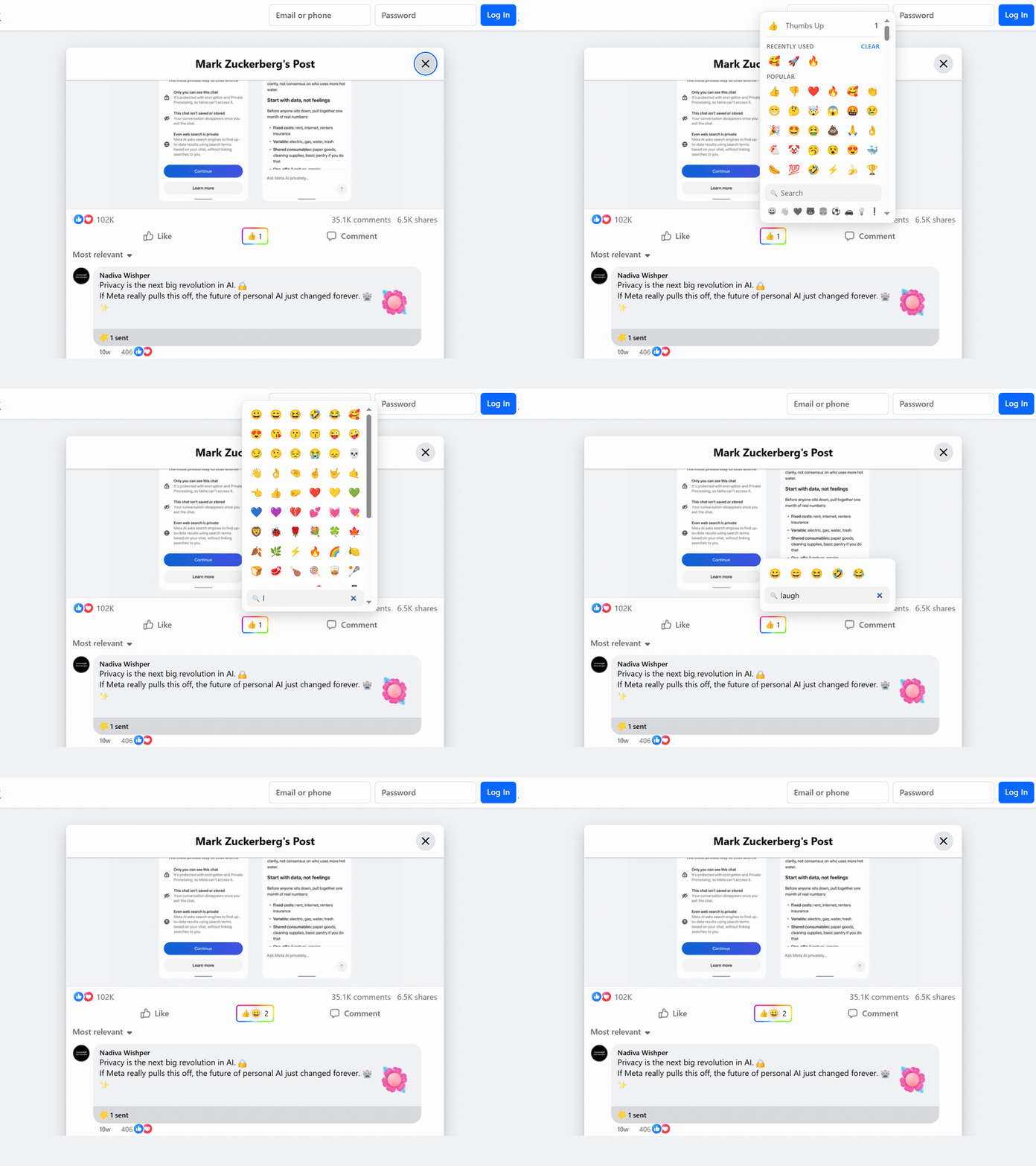
Choosing an emoji in Web Reactions does not click Facebook's Like button or select one of Facebook's native reactions.
Thinking, warning, thumbs down, fire, celebration, and neutral reactions can communicate more than a small fixed set.
Leave native controls visible by default or use the extension setting to hide supported native buttons in your own browser.
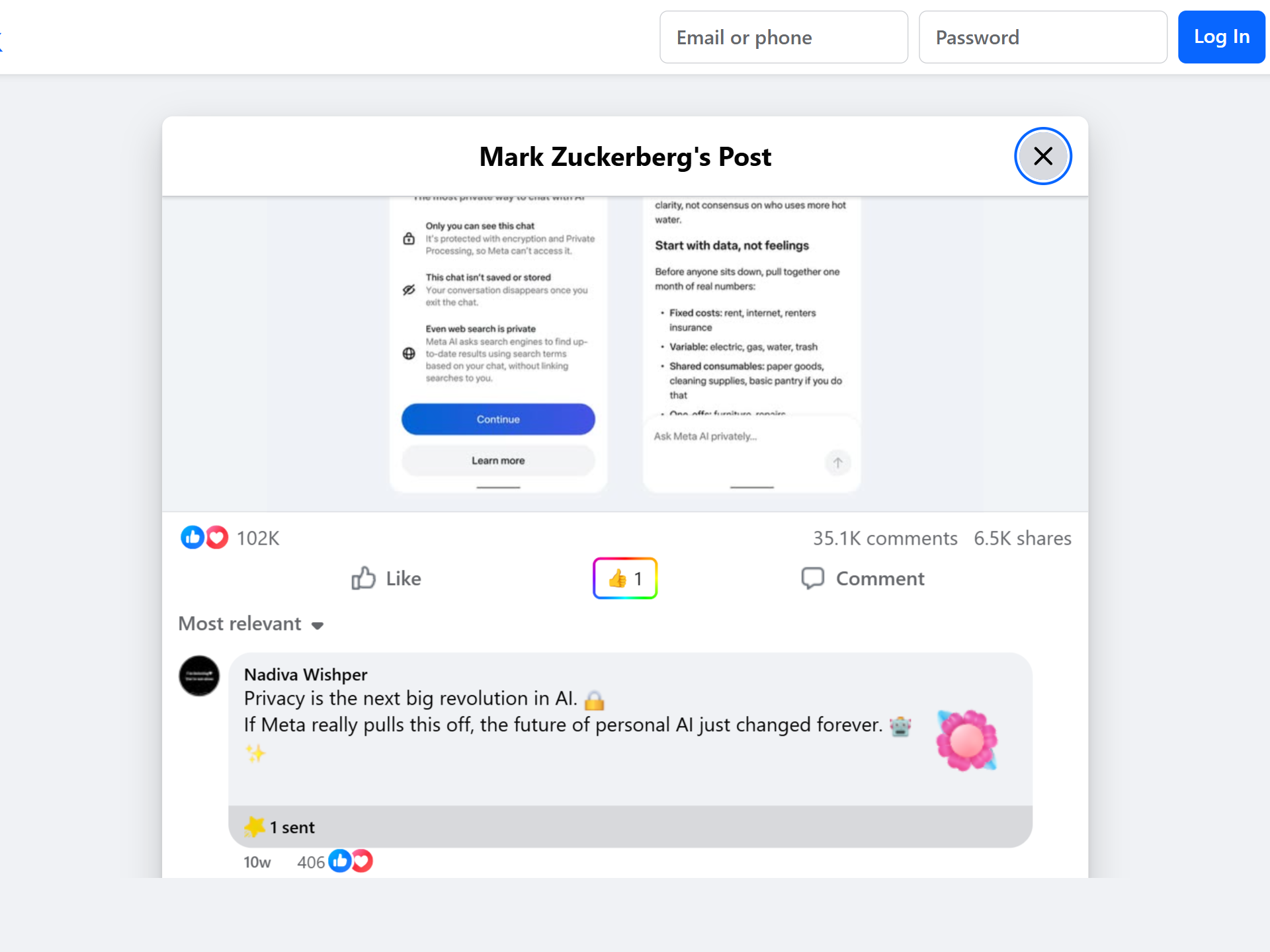
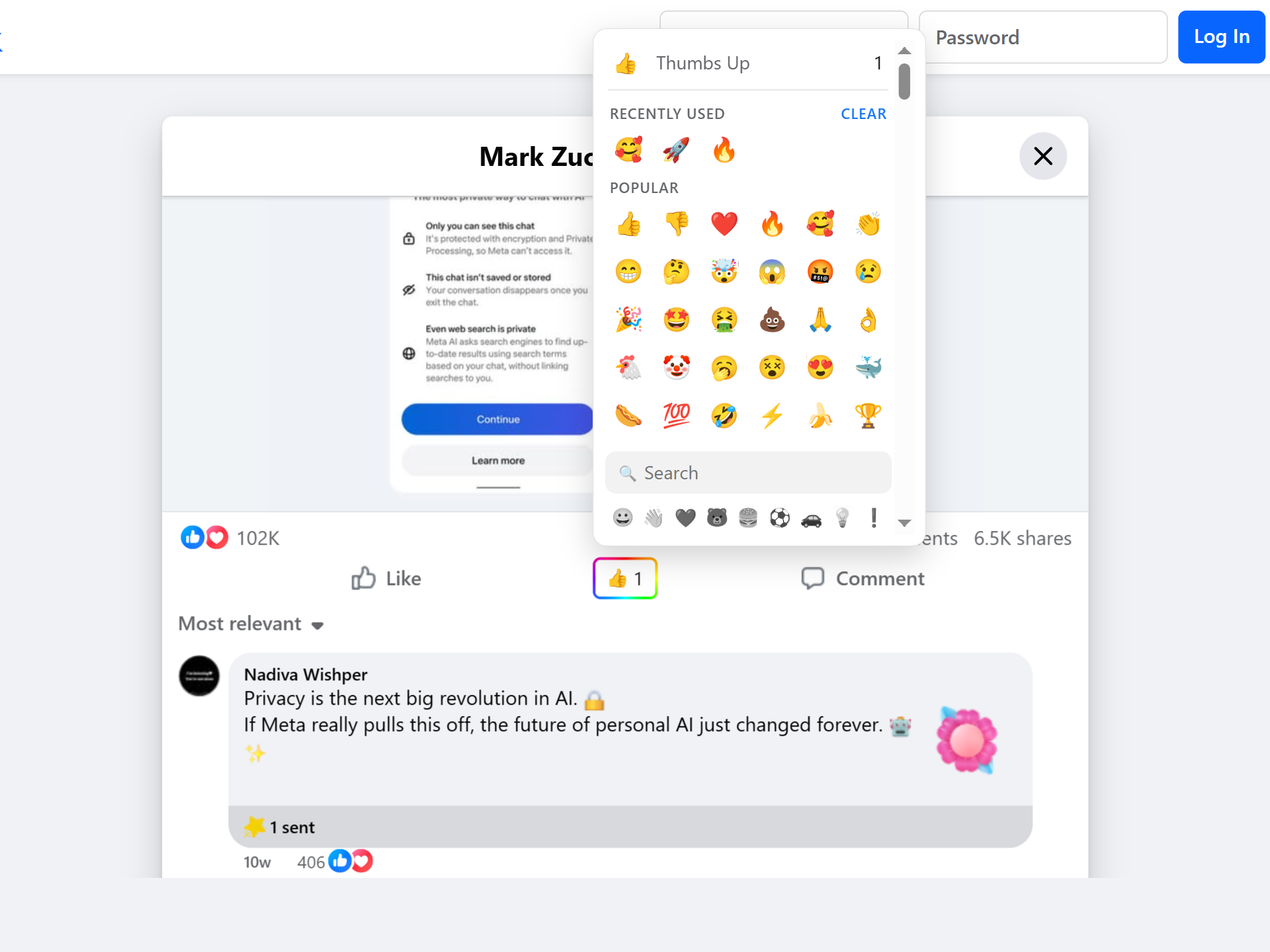
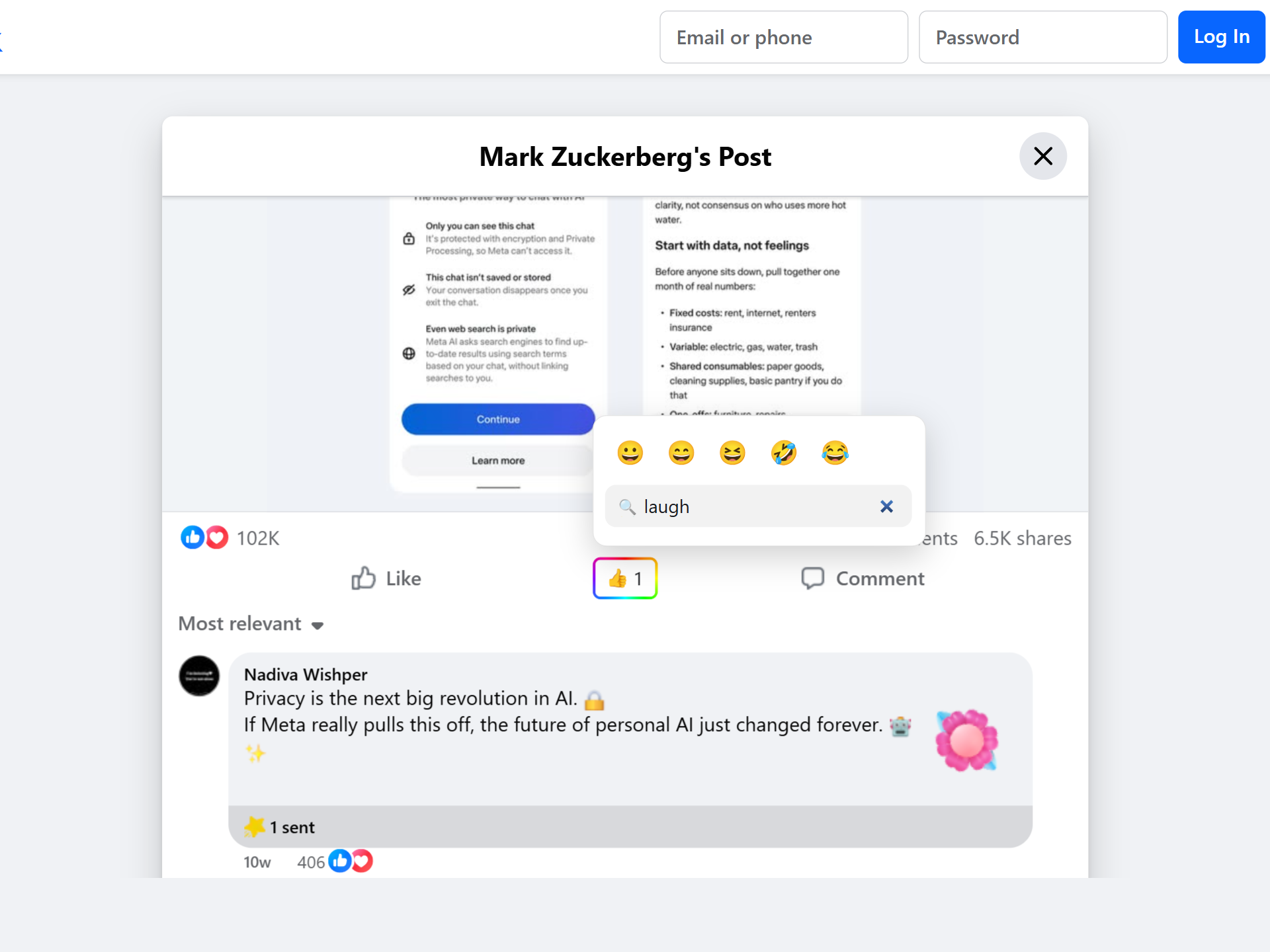
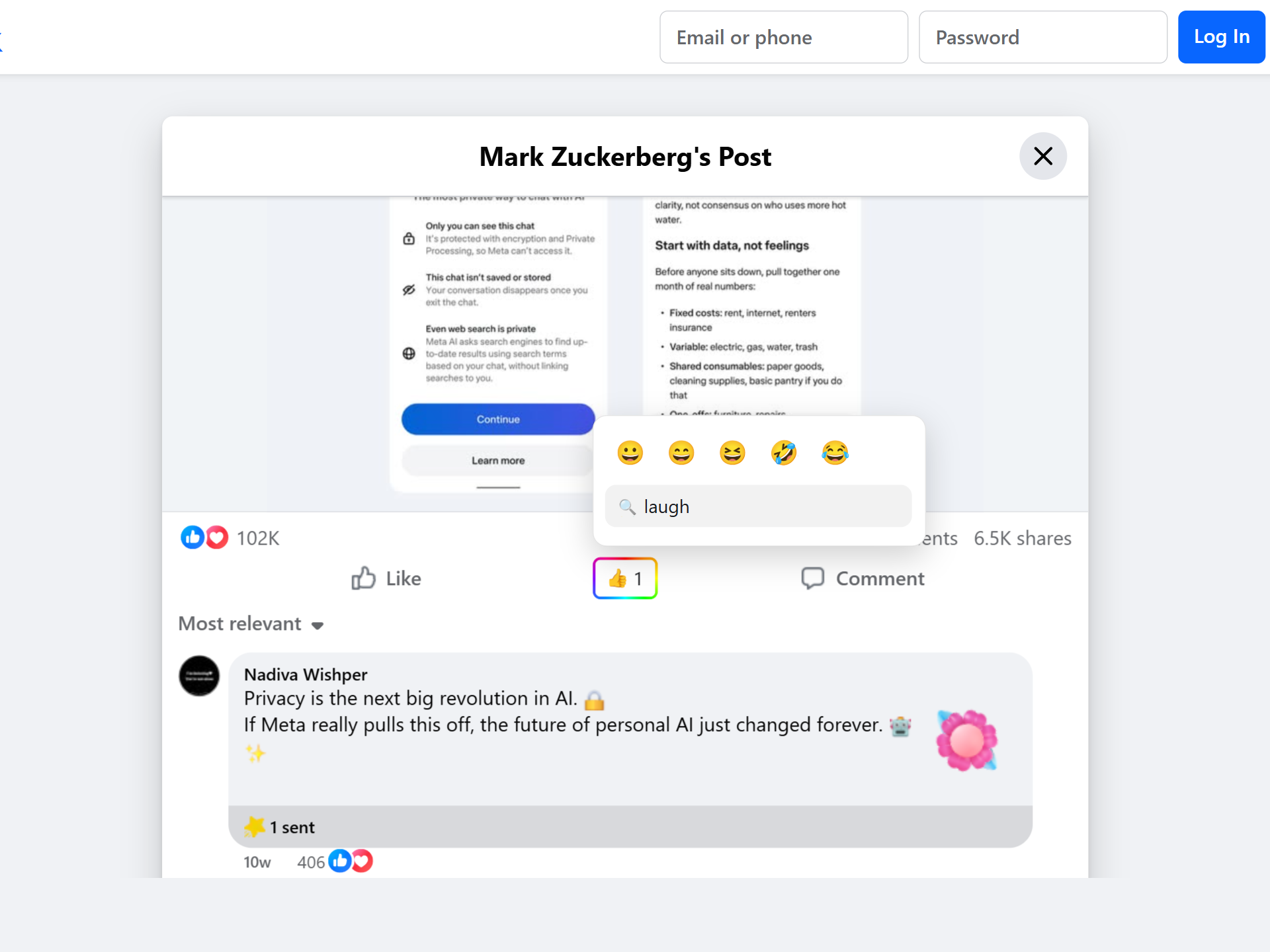
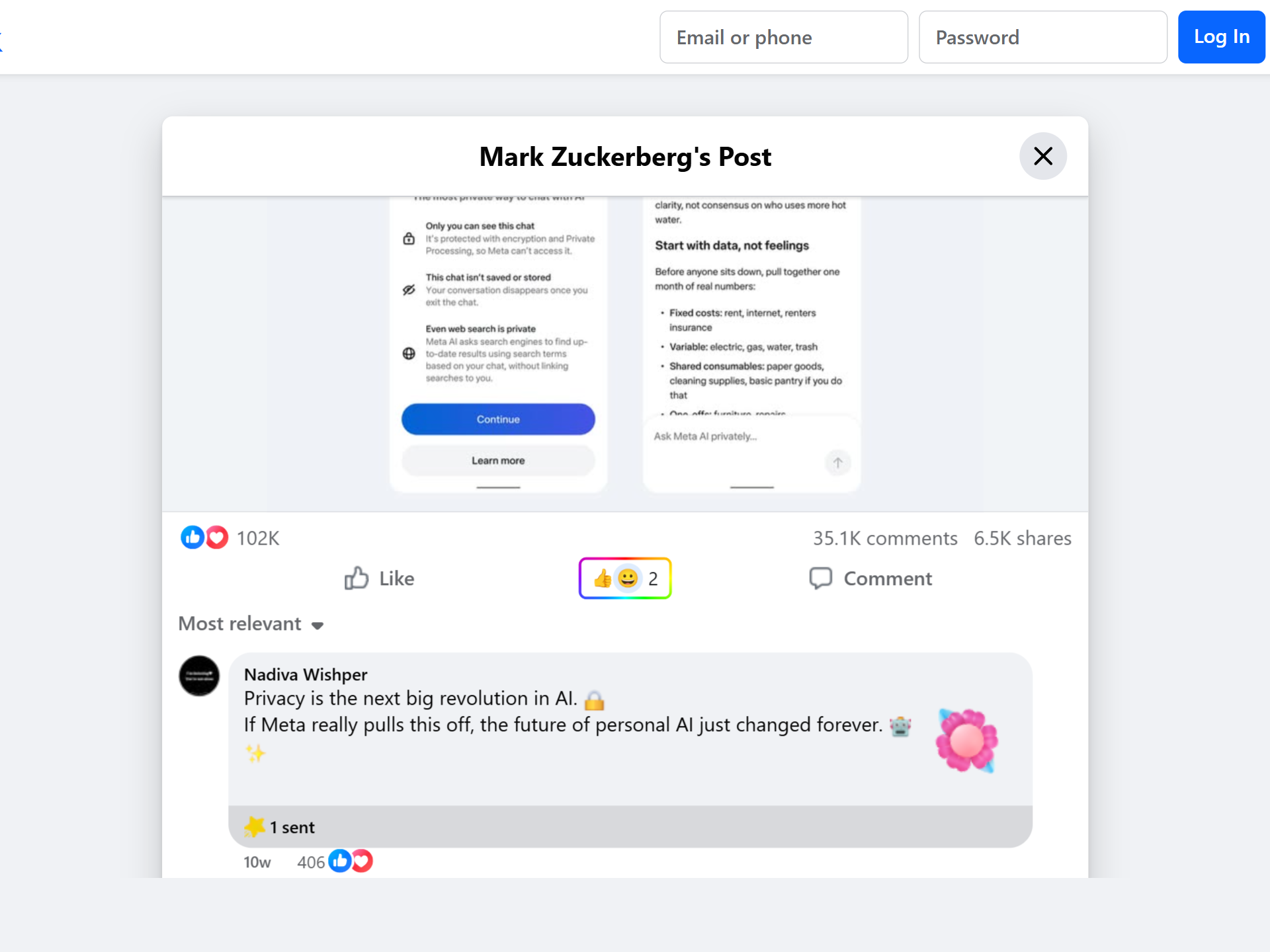
Choosing an emoji in Web Reactions is a Web Reactions action. It does not click Facebook's Like button, choose one of Facebook's native reactions, or post a comment. You can still use Facebook's own controls separately when you want to.
This matters because many people want a reaction that is visible as a public signal without feeding the exact native action menu a platform provides. A thinking face, warning sign, thumbs down, skull, heart, or fire emoji can say something more specific than a Like.
If you are browsing Facebook, Facebook can still operate its site and see activity that happens on Facebook. Web Reactions is not a tracker blocker, ad blocker, or Facebook account wrapper. Its job is narrower: add an independent reaction layer with aggregate Web Reactions counts.
The Facebook adapter is built for the surfaces Web Reactions supports today: posts, photos, Reels, and videos. The picker is placed near the existing action row when the page layout allows it, so the reaction belongs to the thing you are already reading or watching.
Web Reactions shows aggregate counts. It does not expose a public endpoint for who reacted to a Facebook post, photo, Reel, or video. Anyone can read counts, but submitting a reaction requires a one-time email verification in Web Reactions.
The extension popup can show your own recent reactions on your device. That history is for you; it is not uploaded as a public profile or social feed. The public layer is the count attached to the target.
Web Reactions ships with native replacement off. That means Facebook's own Like control remains visible, and the Web Reactions picker appears as a separate control. This is the clearest default because it does not surprise users who still want Facebook's native behavior.
If the native control gets in your way, open the Web Reactions popup and turn on Replace original buttons. On supported placements, the extension hides the native control in your browser and lets the Web Reactions picker take that space. Reload open pages after toggling so the layout settles cleanly.
This is a local interface preference. It does not remove Facebook's buttons for other people, and it does not stop you from turning the setting back off.
Web Reactions is not a Facebook privacy shield: Facebook can still operate its own site while you browse it. Web Reactions only adds a separate aggregate reaction layer and does not press Facebook's native buttons for you.
Read the full privacy policy.
Install Web Reactions, open supported Facebook content, and use the separate picker when Like is too narrow.
No. A Web Reactions emoji is separate from Facebook's native Like and reaction controls.
The adapter is built for supported posts, photos, Reels, and videos where a public target can be derived.
No. If you are on Facebook, Facebook still operates the page. Web Reactions is an independent reaction layer, not a tracker blocker or account wrapper.
The same emoji reaction layer — one account, across every supported site.