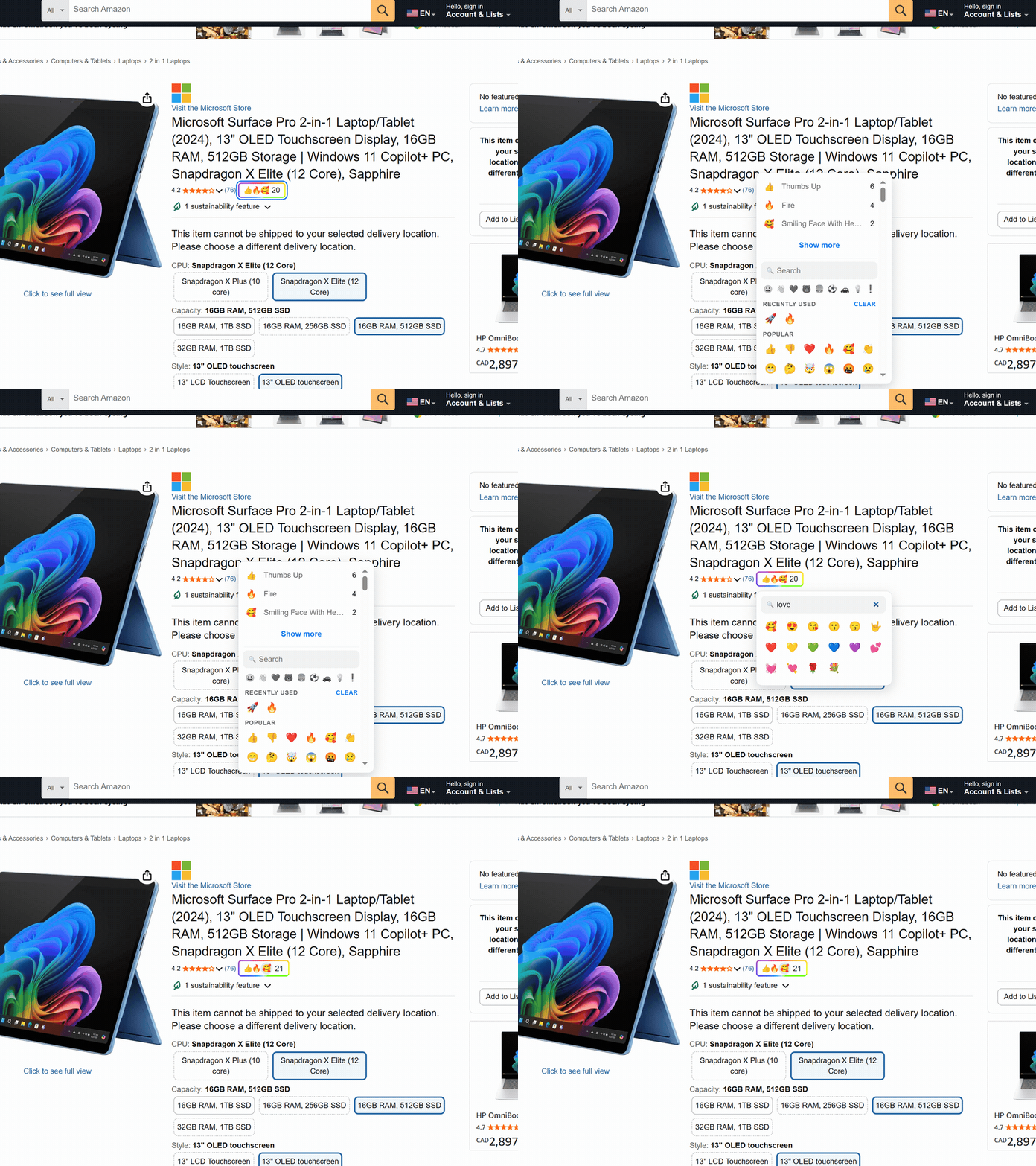
You already know a five-star average can be bought. Web Reactions puts an independent emoji layer on the product page, so you can see how people actually reacted before you pay.
What the store's own signals hide
Inflated stars
Review farms, incentivized ratings, and merged listings push averages up. The one number you're shown is the number the seller worked hardest to improve.
You already know this, which is why so many people scroll straight to the one-star reviews: a large share of online ratings are estimated to be fake, and a perfect average now reads as suspicious rather than reassuring.
The rating system belongs to the store
The marketplace decides which reviews surface, which get filtered, and how the average is computed. None of it is answerable to you, the person spending the money.
One average flattens the feeling
"Overpriced", "suspiciously perfect", "surprisingly good", "not what the photos showed" — a single star average collapses all of it into one digit. A spread of emoji keeps the disagreement visible instead of averaging it away.
Review fatigue
Reading forty paragraphs to answer "is this thing actually good?" doesn't scale. A quick public signal saves that time for purchases that deserve the deep dive.
What you get
Reactions on Amazon today
Amazon product pages are supported now, across regional storefronts. One glance shows how people reacted: fire, skull, heart, or anything else in the palette.
More marketplaces next
eBay, Walmart, AliExpress, Temu, Etsy, and more are on the
public roadmap. Demand decides the order, so ask for your store.
Counts that mean people
Reacting takes a verified account, and every count is recorded in a public log, so
a number means real accounts reacted rather than a bot farm inflating sentiment.
A separate layer, not another review site
It sits beside the reviews, not on top of them
Web Reactions doesn't replace long reviews, comments, or store ratings — it's a lightweight layer beside the listing that anyone can read without signing in to the store. And it isn't owned by the marketplace, the seller, or the brand: the count belongs to the people who reacted, and it behaves the same way
on every supported site.
Public counts, private identities
Reading a product's reactions needs no account; adding your own takes one email confirmation. What's public is the aggregate count on the listing — there is no list of who reacted, and no "who picked this" endpoint to query.
Go deeper
The Amazon specifics, what a reaction attaches to and how regional storefronts are handled, are on
Amazon reactions.
Add one honest signal before checkout
Install the extension and check the reaction layer on the next product page you open. Keep the reviews; add a signal nobody sells.